
Progress in HIV Vaccine Research in Africa
- Bharat Passs
- Feb 2
- 3 min read

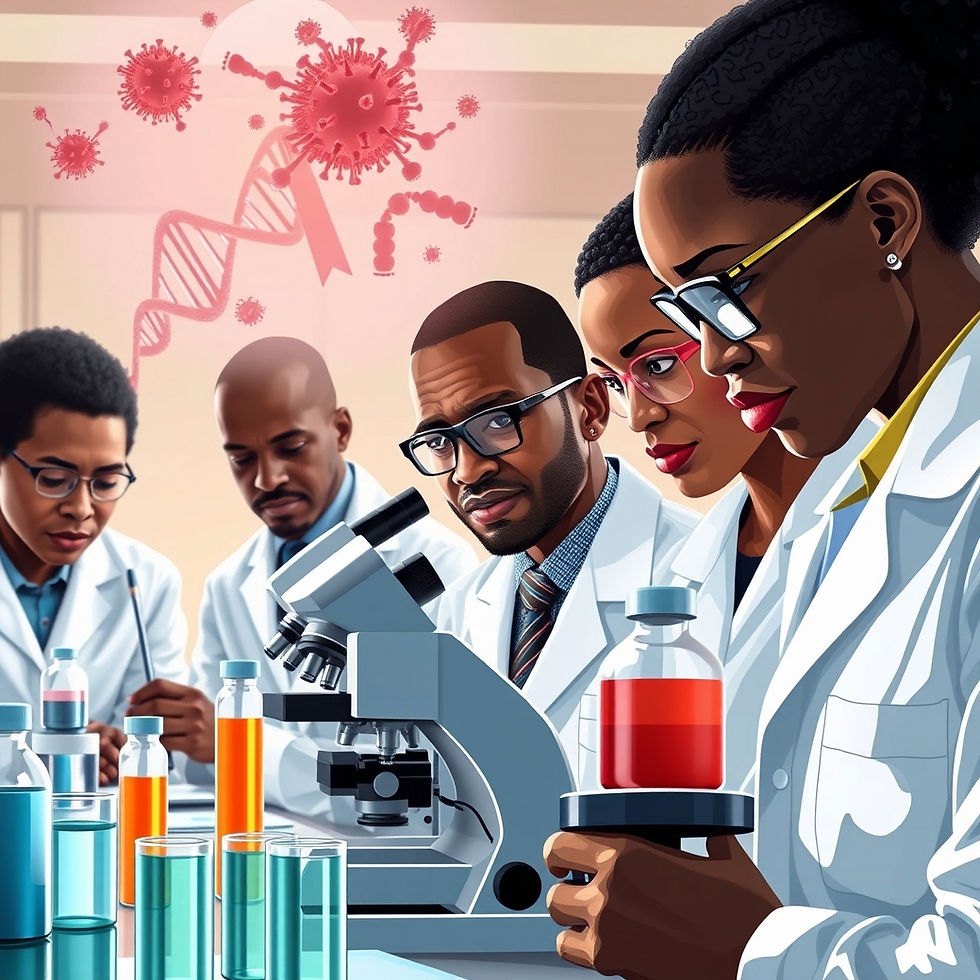
| The Scientific Landscape
Developing an effective HIV vaccine has been a global priority for decades because, despite massive progress in HIV prevention and antiretroviral therapy (ART), no licensed vaccine exists that can reliably prevent infection. A safe and effective HIV vaccine remains a critical missing tool to end the HIV/AIDS pandemic.
Modern vaccine research focuses on technologies that teach the immune system to recognize and neutralize HIV before it establishes infection. Recent breakthroughs include strategies to induce broadly neutralizing antibodies (bnAbs) or strong T-cell-based immunity, both considered essential to addressing HIV’s high mutation rate and genetic diversity.
| Major HIV Vaccine Initiatives in Africa
Africa has been central to both the epidemiology of HIV and vaccine research. With the highest burden of HIV globally, sub-Saharan Africa has been the setting for multiple clinical vaccine trials and research networks:
In 2025, a Phase 1 clinical trial (IAVI C114) began in Zimbabwe and South Africa to evaluate the novel GRAdHIVNE1 vaccine candidate — designed to induce strong T-cell immunity using a gorilla adenovirus vector. African scientists and institutions are co-leading this effort with global partners.
The BRILLIANT Consortium, funded by a major USAID grant (~$45 million), is driving early-stage research including trial designs, lab analyses, and innovative immunogen testing. While funding challenges have disrupted some aspects of this work, the initiative underscores a strategy to build African-led scientific capacity.
Previous large-scale vaccine efficacy studies, such as PrEPVacc (East and Southern Africa), tested vaccine regimens in combination with other prevention strategies; although interim results led to halting some vaccine arms, the field is generating key scientific and operational insights.
In parallel with Phase I work, new early-phase studies (e.g., IAVI G004 in South Africa) are testing mRNA-based immunogens to prime bnAb responses, an approach informed by HIV biology and modern vaccine platforms.
Despite occasional setbacks (e.g., halting of some vaccine trials due to lack of efficacy), African researchers and institutions are increasingly leading and shaping the clinical and scientific agendas for HIV vaccine development.
| African HIV Epidemic: Cases and Trends
| Epidemiology
Sub-Saharan Africa remains the region most affected by HIV. In 2023, an estimated 25.9 million people in the region were living with HIV, contributing a substantial proportion of global infections.
Antiretroviral treatment uptake and comprehensive programs have yielded important public health gains; millions are on ART, and deaths have dropped significantly compared to two decades ago. However, new infections persist, particularly among young people and key populations, maintaining pressure on prevention efforts.
| Why Vaccines Matter
Current prevention tools, including ART, pre-exposure prophylaxis (PrEP), and long-acting injectable prophylactics, have transformed HIV management, yet they do not eliminate transmission risk and require ongoing access and adherence. A preventive vaccine would be a game-changer by providing long-lasting immunity and reducing incidence at a population level.
| AMURT Africa: Role in HIV Response
AMURT Africa (Ananda Marga Universal Relief Team, Kenyan chapter of the broader AMURT network) is a non-governmental organization focused on community health, education, and socio-economic support, contributing to the broader HIV response in Africa with a grassroots, public-health-oriented approach.
| Community Support and HIV Awareness
While AMURT Africa is not a clinical vaccine research entity, it plays a valuable role in HIV prevention and care via community-centered health programs:
Healthcare access and screening: AMURT health centers in Kenya provide essential services, including HIV testing, counseling, and linkage to care.
Education and Prevention: AMURT has historically implemented programs that empower communities with prevention skills, promote safe behaviors, and reduce stigma, including youth peer-education and condom distribution campaigns.
Support for vulnerable populations: Through home-based care, psychosocial support, and support for orphans and vulnerable children, AMURT helps mitigate the social and economic impacts of HIV on families and communities.
These efforts complement biomedical HIV research by strengthening community readiness, improving health literacy, and facilitating uptake of prevention and care services, all prerequisites for successful vaccine trial participation and eventual vaccine implementation.
The Path Forward
The scientific quest for an HIV vaccine in Africa blends cutting-edge research with local leadership and community engagement. While a licensed preventive HIV vaccine remains elusive, Phase I trials, innovative immunogen strategies, and strengthened research ecosystems are driving the field forward. African researchers and trial networks are no longer just sites for external studies;
they are increasingly steering the science.
Meanwhile, organizations like AMURT Africa provide critical community-level platforms supporting prevention, education, and care, domains essential for any future vaccine’s success and acceptance.
Achieving a globally impactful HIV vaccine will depend on sustained investment, robust African scientific leadership, and integrated health-system engagement across urban and rural communities.

Comments